Product Details
LD-400 Carbon Steel Set Screws Grub Screws Allen Head Black Oxide Pointed | Wholesale Supplier
LD-400 carbon steel set screws and grub screws with hex socket (Allen) head. M3-M16 diameter, 4-50mm length. Black oxide finish, cup/flat/cone/dog point types, DIN 913 standard.
The LD-400 carbon steel set screws, also known as grub screws, are headless threaded fasteners designed to secure one component to another by applying clamping pressure through the screw tip rather than through a conventional head. Unlike standard bolts and screws that clamp via a bearing surface under the head, set screws are fully threaded and driven entirely into a tapped hole using a hex socket (Allen) key, with the screw tip bearing against a shaft, hub, collar, or mating surface to prevent relative movement. This makes set screws the standard fastener for locking pulleys, gears, couplings, knobs, and collars onto shafts, where a protruding head would interfere with assembly or rotation. The Class 45H carbon steel hardness provides the strength needed for the point to indent and grip the shaft surface without deforming under torque transmission loads.
The assortment includes four point types, each engineered for specific fastening and functional requirements. Cup point set screws feature a recessed, cup-shaped tip that provides excellent holding power with minimal shaft damage, making them the general-purpose choice for securing components to smooth shafts. Flat point set screws have a flat bearing surface that distributes load over a larger area for applications requiring repeated adjustments without marring the shaft, and for use on shafts with pre-machined flat spots. Cone point set screws feature a sharp pointed tip that bites into the shaft material for maximum holding torque in high-vibration and permanent installations, though the indentation makes subsequent adjustment and removal more difficult. Dog (full-dog) point set screws have a cylindrical pilot tip that locates precisely into a mating hole or slot, functioning as both a locator and a retainer for alignment and axial positioning applications.
The black oxide finish provides a thin, conversion-coating surface treatment that offers mild corrosion resistance while preserving the precise dimensional tolerances of the threaded components. Unlike heavy plated coatings, black oxide adds negligible thickness to the surface, ensuring the hex socket and thread dimensions remain within DIN 913 specifications for reliable engagement and interchangeability. The matte black appearance is aesthetically uniform and non-reflective, which is preferred in machinery, instrumentation, and applications where appearance matters. Black oxide also provides a clean, dry surface that will not flake or chip like plated coatings, and the finish can be supplemented with a rust-preventative oil for additional corrosion protection in storage and sheltered indoor service.
In shaft and collar fastening applications, set screws are typically installed in radially tapped holes in hubs, collars, and coupling halves, with the screw tip bearing directly on the shaft surface or into a machined flat or groove. For maximum holding power and to prevent shaft damage in critical applications, two or more set screws are often installed at 90-degree or 120-degree offsets around the hub circumference, distributing the clamping force and improving resistance to slippage under torque. The hex socket drive allows the screw to be fully recessed below or flush with the hub surface, providing a compact, unobtrusive fastening solution that does not require external clearance for a wrench. Optional zinc plating and stainless steel 304/316 grades extend the range to corrosion-resistant and food-grade applications where black oxide carbon steel would be unsuitable.
Core Features
- Carbon steel Class 45H hardness for strong point grip without deformation
- Hex socket (Allen) drive for compact, recessed installation
- Cup, flat, cone, and dog point types for versatile fastening
- Black oxide finish preserves precise thread and socket tolerances
- DIN 913/914/915/916 standard dimensions for interchangeability
- Size range M3 to M16, lengths 4-50mm for broad coverage
- Optional zinc plating and stainless steel 304/316 grades
- CE, ISO 9001, and DIN 913 certified quality
Application Scenarios
- Pulley, gear, and coupling hub locking onto shafts
- Knob and dial attachment to control shafts
- Collar and sleeve axial positioning on linear shafts
- Machinery component alignment and retention
- Hinge and pivot pin fastening
- Fixture and jig adjustment mechanisms
FAQ
What is the difference between a set screw and a standard screw?
Set screws are headless fasteners that clamp through the screw tip rather than a bearing surface under the head. They are driven fully into a tapped hole using a hex socket key, with the point bearing against a shaft or mating surface to prevent movement. Standard screws use the head to clamp components together and protrude above the surface.
Which point type should I choose for my application?
Cup point is the general-purpose choice for strong holding with minimal shaft damage. Flat point is best for repeated adjustment and shafts with machined flats. Cone point provides maximum holding torque for permanent, high-vibration applications but bites into the shaft. Dog point locates into a hole or slot for alignment and axial positioning.
Does black oxide provide sufficient corrosion resistance for outdoor use?
Black oxide offers only mild corrosion resistance suitable for indoor and sheltered applications. For outdoor, humid, or corrosive environments, choose zinc-plated or stainless steel 304/316 set screws. Black oxide can be supplemented with rust-preventative oil for storage and indoor service.
How many set screws should I use to secure a component to a shaft?
For light-duty and low-torque applications, a single set screw may suffice. For high-torque or high-vibration applications, install two or more set screws at 90-degree or 120-degree offsets around the hub to distribute clamping force and improve resistance to slippage. Always follow the equipment manufacturer's specifications for torque and quantity.
Related Products
FH-019
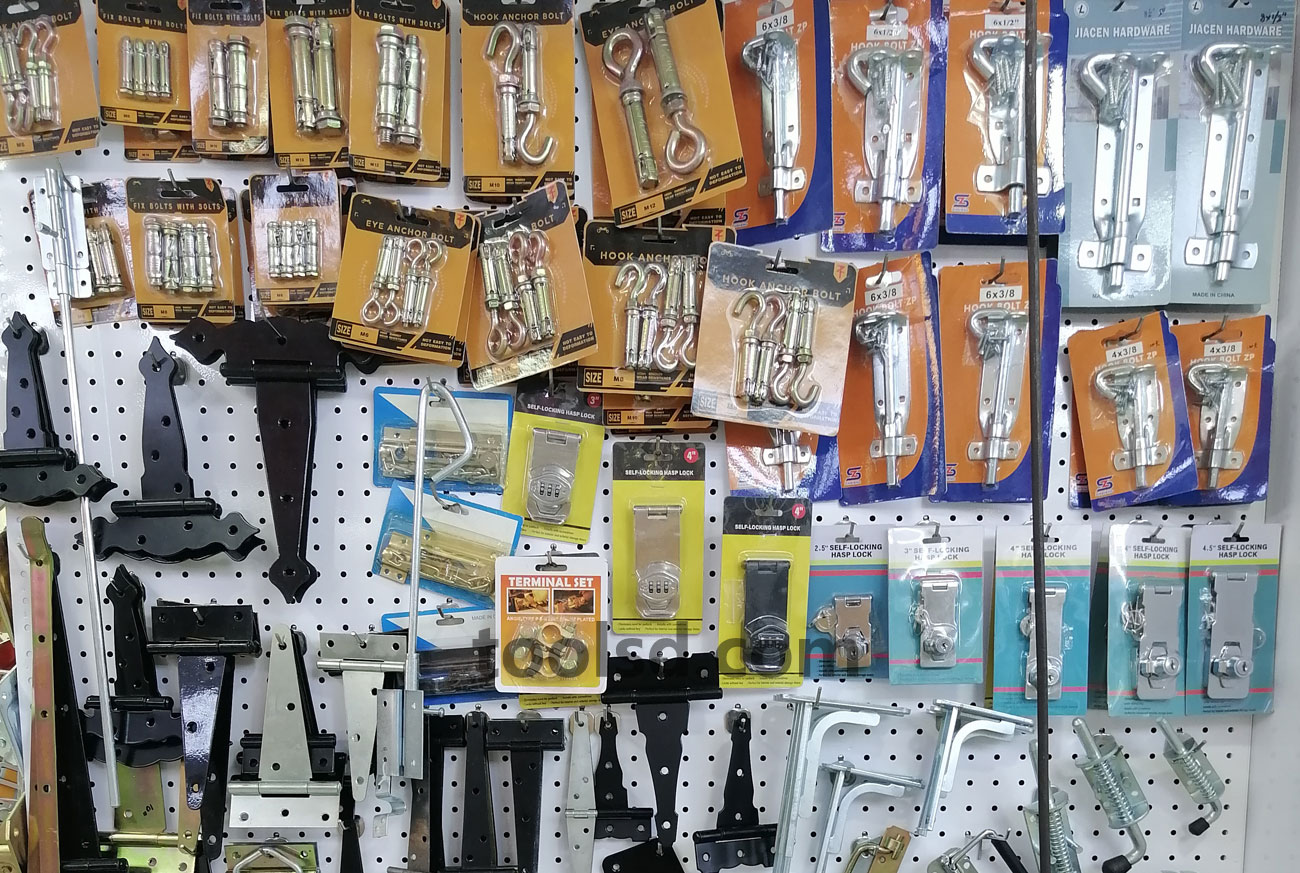
FH-019 Expansion Bolt Wall Anchor Assortment with Nuts Washers
Carbon steel grade 4.8 sleeve expansion bolt kits with matching nuts, washers and expansion shields, M6-M16 multi-size options for concrete, brick and masonry construction fixing, indoor & outdoor anti-rust zinc plated finish.
500 pcsFH-020
FH-020 Eye Bolt with Nut Lifting Ring Bolt Assortment
DIN 580 certified lifting eye bolt kits, available in Q235 carbon steel and 304 stainless steel, M6-M16 sizes with WLL 50kg-500kg, complete with nut and washer for machinery lifting, overhead hanging and industrial rigging applications.
300 pcs
FH-021
FH-021 Chemical Anchor Bolt Expansion Bolt Bulk Construction Fastener Mix
Heavy-duty chemical anchor bolt kits with Grade 5.8 & Grade 8.8 carbon steel studs, M8-M20 full sizes, equipped with matched resin capsules, nuts and washers; hot dip galvanized anti-rust option for structural concrete, bridge and heavy industrial construction fixing.
1000 pcs
FH-022
FH-022 Eye Bolt with Nut Lifting Ring Bolt Boxed Assortment
DIN 580 & CE certified lifting eye bolt kits, available in Q235 carbon steel and 304 stainless steel, M6-M16 multi-size boxed sets with WLL 50kg-450kg, complete with nut and washer for machinery lifting, overhead hanging and industrial rigging applications.
300 pcs