Product Details
LD-200 HSS Tap and Die Threading Set
LD-200 HSS Tap and Die Threading Set provides metric taps and dies from M3 to M12 with T-handle wrench and die stock for thread cutting and restoration in automotive engine repair, machinery maintenance, and metal fabrication.
Core Features
- M2 HSS construction heat-treated to HRC 62-64 for cutting strength
- 7 metric tap sizes from M3 to M12 for internal threads
- 7 matching metric die sizes for external thread cutting and restoration
- T-handle tap wrench with 3-jaw chuck for secure tap holding
- Die stock with 2-screw clamping for die retention
- Plastic storage case with foam insert for tool protection
Application Scenarios
- Automotive engine block thread repair
- Machinery and equipment threaded hole tapping
- Bolt and stud thread restoration and cleaning
- Metal fabrication threaded hole creation
- Industrial maintenance and repair
- DIY mechanical and automotive thread repair
FAQ
What is the difference between taper, plug, and bottoming taps?
Taper taps have a long lead that starts threads gradually, ideal for starting blind holes. Plug taps have a shorter lead for general through-hole tapping. Bottoming taps have a very short lead for threading the bottom of blind holes. The LD-200 set includes plug taps suitable for most applications.
How do I determine the correct drill size for tapping?
The correct tap drill size is approximately the thread diameter minus the thread pitch. For M6x1.0: 6 - 1.0 = 5mm drill. For M8x1.25: 8 - 1.25 = 6.8mm drill. Using the correct drill size prevents tap breakage and ensures proper thread engagement.
How do I prevent tap breakage?
Use the correct drill size for the tap. Apply cutting fluid generously. Turn the tap forward 1/4 turn, then reverse 1/8 turn to break chips. Never force the tap. Keep the tap aligned perpendicular to the workpiece. Clear chips frequently by fully withdrawing the tap.
Can these taps and dies be used on stainless steel?
Yes, M2 HSS taps and dies can cut threads in stainless steel, but it requires more care. Use sulfur-based cutting oil, slower speed, and frequent chip clearing. Pre-drill at the upper end of the recommended drill size range for stainless steel to reduce torque.
Related Products
LD-411
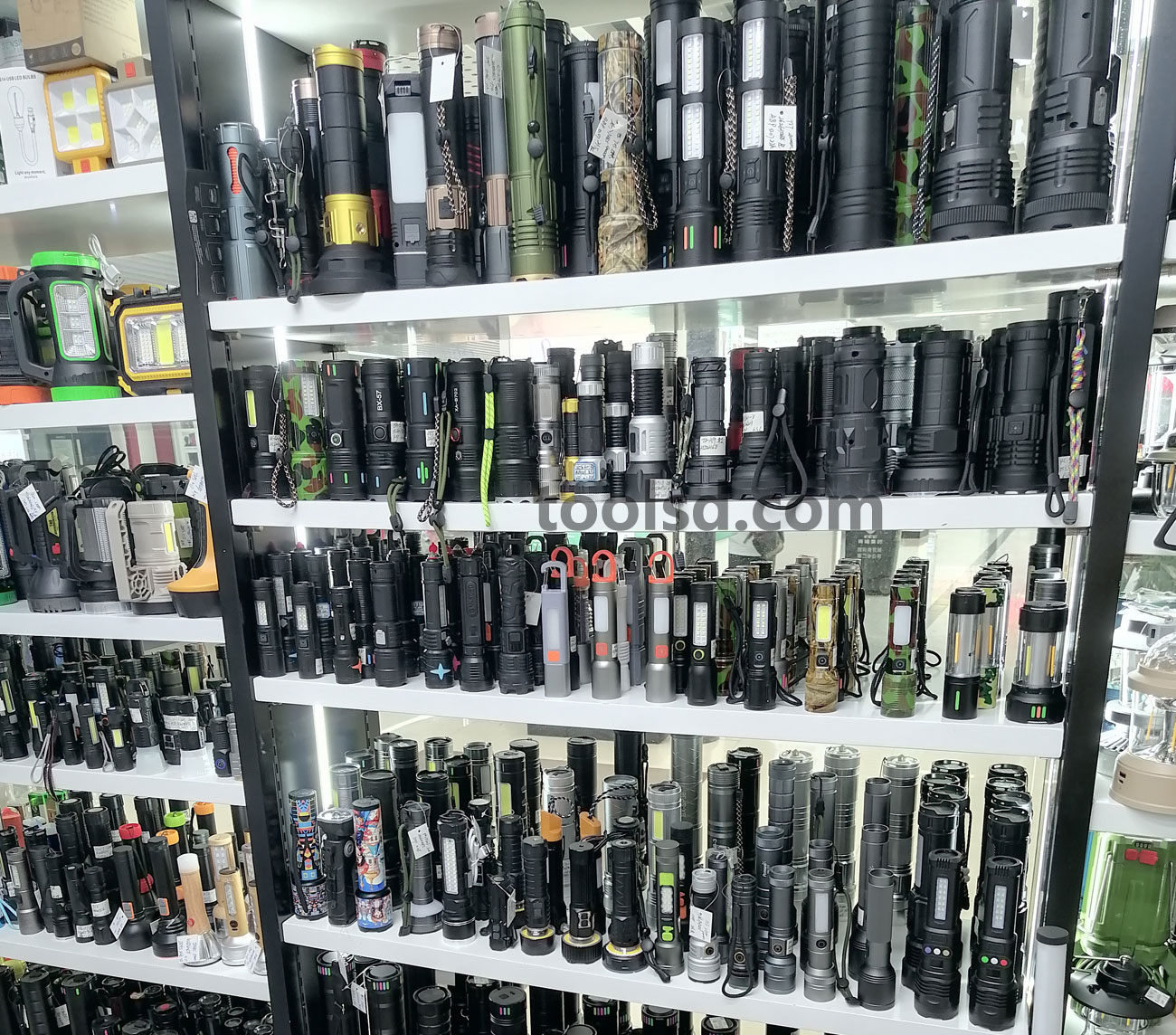
LD-411 Aluminum Alloy LED Tactical Flashlight Zoomable XML T6 Rechargeable | Wholesale Supplier
LD-411 aluminum alloy LED tactical flashlight with CREE XML T6 LED, 1000-1200 lumens, zoomable focus, 18650 rechargeable battery, 5 modes (high/medium/low/strobe/SOS), Type III hard-anodized finish.
200
LD-412
LD-412 ABS LED Rechargeable Work Light COB Magnetic Folding 360° | Wholesale Supplier
LD-412 ABS LED rechargeable COB work light with 360° folding bracket, N52 magnetic base, USB charging. 350-500 lumens, 18650 battery, 3-5 hour runtime, ideal for auto repair and maintenance.
200LD-413
LD-413 Aluminum LED Multi-Function Flashlight with Side COB Panel USB | Wholesale Supplier
LD-413 aluminum LED multi-function flashlight with dual lighting: front CREE XML T6 (1000lm) + side COB panel (300lm). USB rechargeable 18650 battery, 5 modes, ideal for inspection and emergency use.
200LD-414
LD-414 Aluminum Alloy LED High Power Flashlight XHP50 Long Range 2000lm | Wholesale Supplier
LD-414 aluminum alloy high-power LED flashlight with XHP50 chip, 1800-2000 lumens, 200-500m beam distance. IPX6-8 waterproof, 26650 or dual 18650 battery, 5 modes, long-range search and rescue.
100